Modelling late frost risk at three vineyards
How Laithwaites tested three supplier vineyards against six climate risks, each one defined around the crop rather than the calendar.

A frost in March and a frost in May are not the same risk
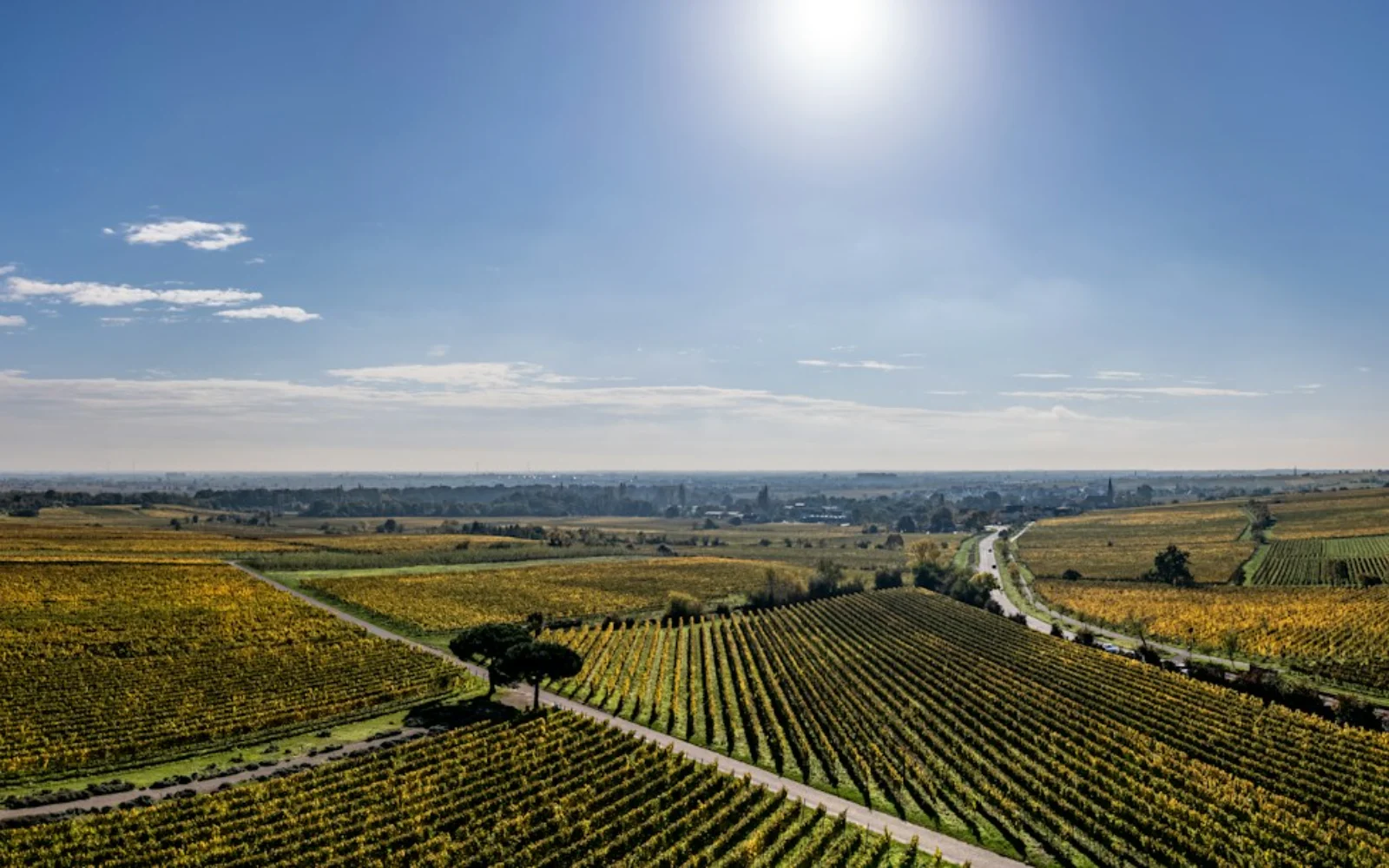
The study examined three supplier vineyards in Spain, France and England, considering how changing climate conditions could affect the crop at each location.
Frost can damage new growth after bud burst. The study examined how the timing of bud burst and the last frost could change at each vineyard.
climate risks, each defined around the crop
Modelling bud burst and late frost together
RedLines modelled bud burst dates and last frost dates as separate projections at each site, then overlapped them. A year counts as safe if at least two weeks separate bud burst from the last frost, or if no frost occurs at all. The reported metric is the percentage of years that clear that bar, so on this measure a high score is a good one.
The same principle shaped the other five risks. Sun damage is not "hot days" but days above 38°C for more than six hours, the threshold at which research shows grapes become susceptible. Wildfire uses the Canadian Forest Service Fire Weather Index, counting days at High danger or above. Water stress compares projected conditions against each site's own historical wetness distribution rather than a regional average, using the Standardised Precipitation-Evapotranspiration Index.
Flood risk was assessed from World Resources Institute data at 1-in-2, 1-in-5 and 1-in-10 year extremes. None was found at these three sites within the scope of that assessment.
Findings across the three vineyards
Water stress, wildfire and solar radiation were projected to increase across the three vineyards under both scenarios. Frost outcomes differed by site.
- Three vineyards in Spain, France and England assessed on one bespoke method
- Six risks modelled under SSP245 and SSP585 to 2100, each metric defined against the crop
- Frost outcomes differed across the three sites
Does your risk depend on timing, not just severity?
We can develop bespoke risk modelling where the timing of events matters to the activity being assessed.