
Projected wheat yields and costs in three European markets
How Mondelez examined projected wheat yields and costs in France, Spain and Poland.
Testing assumptions about future wheat supply
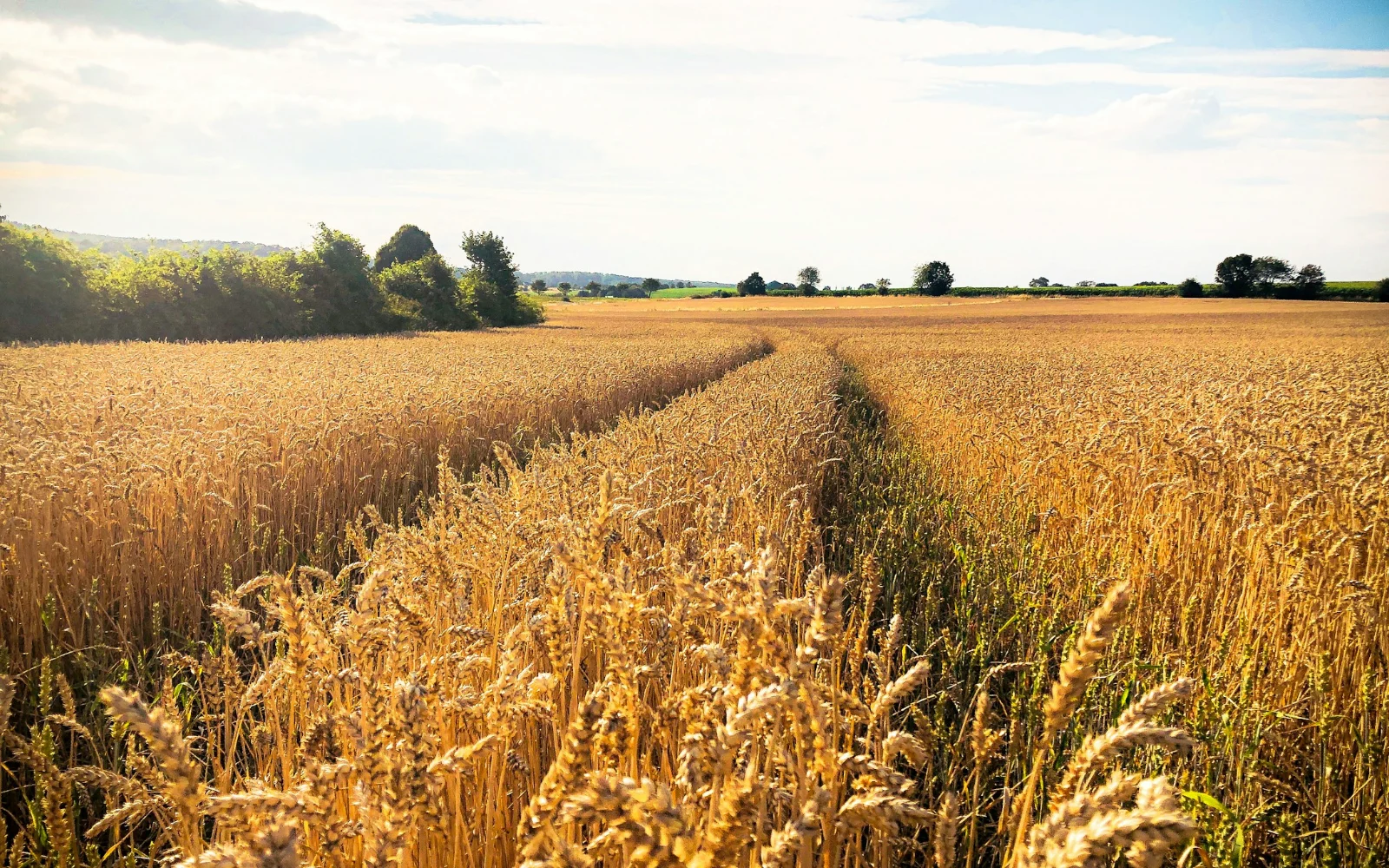
The study examined what long-term climate trends could mean for wheat yields, prices and sourcing costs in three European markets.
RedLines linked crop yield projections to price estimates, with the sources and assumptions documented.
Mondelez commissioned the work as a test-and-learn study of the three markets.
model combinations: 5 climate models by 11 crop models
From projected wheat yields to sourcing costs
Rather than build a yield model, RedLines used the established ones. Crop yield projections came from the Global Gridded Crop Model Intercomparison under the AgMIP consortium, run as an ensemble across eleven crop models and five climate models, aligned to IPCC scenarios. Climate data came from the World Climate Research Programme.
Converting yield to price used a long-run own-price elasticity for wheat of -0.372, sourced from published analysis by the American Economic Association rather than fitted in-house, with current prices benchmarked to milling wheat futures on MATIF. Every link in that chain is a citable source, which is the point: a procurement team can check it.
The study is explicit about what it does not cover. It models long-run trend, not inter-year volatility. It excludes acute events such as wildfire and flooding, and excludes geopolitical risk. It recommends a volatility study before anyone makes sourcing decisions on the strength of it.
Projected yield gains and the limits of the analysis
In all three markets the ensemble showed yields holding or improving to 2030 and improving by 2050. Poland showed the strongest growth. Counter-intuitively the high-emissions pathway, SSP5-8.5, was the most positive for wheat yields in these regions, and the yield extremes of 2050 were not worse than today's.
The study projected average reductions in wheat spending of 1.3 to 2.8%, reaching 5% under SSP5-8.5 in Poland. These were modelled findings, rather than measured savings.
- Scope
- Wheat yield and price modelled to 2050 for France, Spain and Poland, across an ensemble of five climate models and eleven crop models
- Finding
- The study projected stable or higher wheat yields and lower wheat costs in France, Spain and Poland. These findings concerned long-term trends; they did not mean wheat sourcing was free from climate risk. Acute events and geopolitical risks were outside the study’s scope.
- Caveat
- The study excludes acute events and geopolitical risk, and models trend rather than year-to-year volatility. A volatility study was recommended before acting on it. Financial return was not measured, and none is claimed
Understand how climate risk could affect your supply chain
Discuss the commodity, markets and business question you want to assess.