For many asset-heavy businesses, insurance renewal no longer feels like a routine exercise.
Rates are softening, claims values are increasing, but this means the process for renewal is becoming harder and more complex.
The UK commercial insurance market has actually softened in some areas. Marsh says UK commercial insurance rates fell 7% in Q4 2025, while UK property rates fell 10%, helped by strong insurer competition and available capacity.
But that does not remove the underlying issue.
Claims pressure from weather remains real. The ABI says insurers paid £109 million to businesses for weather-related damage and business interruption in Q1 2025, and £124 million in Q2 2025.
The frequency and intensity of climate-related disasters continue to rise globally, affecting millions of people and underscoring the urgent need for climate action. With direct economic losses of nearly USD 4.5 trillion recorded, climate risks are increasingly felt in all regions of the world, especially visible in the growing number of disasters driven by climatic events.
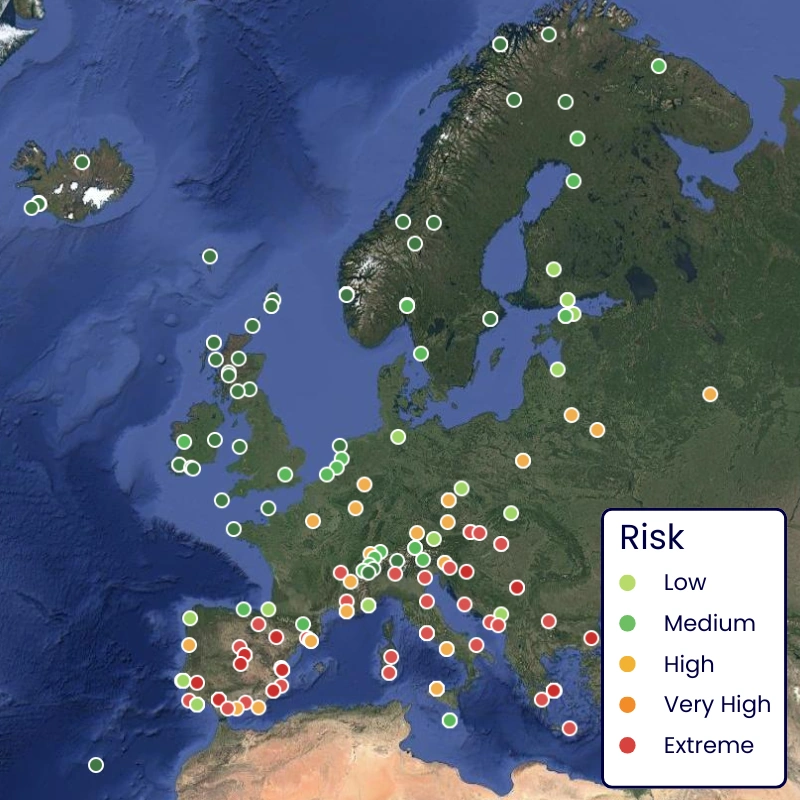
Climate risk assessment depends on hazard, exposure, and vulnerability—the assessment of climate risk is based on the interaction of these three risk factors. Understanding which communities and resources are most affected requires reliable indicators and comprehensive assessment sets, which are often compiled by governments and international organisations.
So the point is not that renewal is automatically getting more expensive.
The point is that businesses increasingly need a clearer and more defensible view of their own risk.
Organisations need access to reliable indicators and assessment sets to understand their vulnerability and manage their resources effectively.
Access to information and resources is critical for resilience and for managing the impacts of climate risk.
Why renewals are getting more demanding
Even when the market is competitive, underwriters still need to understand what they are taking on.
That matters more when weather-related losses are material and climate risk is becoming a more established part of insurance supervision. The PRA’s updated supervisory statement says climate-related financial risks are already becoming apparent, and expects firms to embed them in governance, risk management and scenario analysis.
Understanding the likelihood and uncertainty of climate risks is crucial, and knowledge from trusted sources such as the IPCC is essential for robust assessment.
For corporates, that creates a more practical challenge than a theoretical one.
You may not be asked to produce something highly technical. But you are more likely to need a clear answer to some basic questions:
- Which assets are most exposed?
- How material is that exposure?
- Does it affect operations, cost or continuity?
- Do you know where action is worth taking?
These questions often require data from local authority climate projections and scenarios to provide robust answers. This is where a simple tool like RedLines Scan comes in.
Trusted climate information and climate projections are necessary for assessing local climate risk, and authorities are under increasing pressure to manage the impacts from climate change.
If you can answer those questions clearly, the renewal process is usually easier to manage.
If you cannot, the conversation often becomes slower and harder to control.
Climate change and insurance
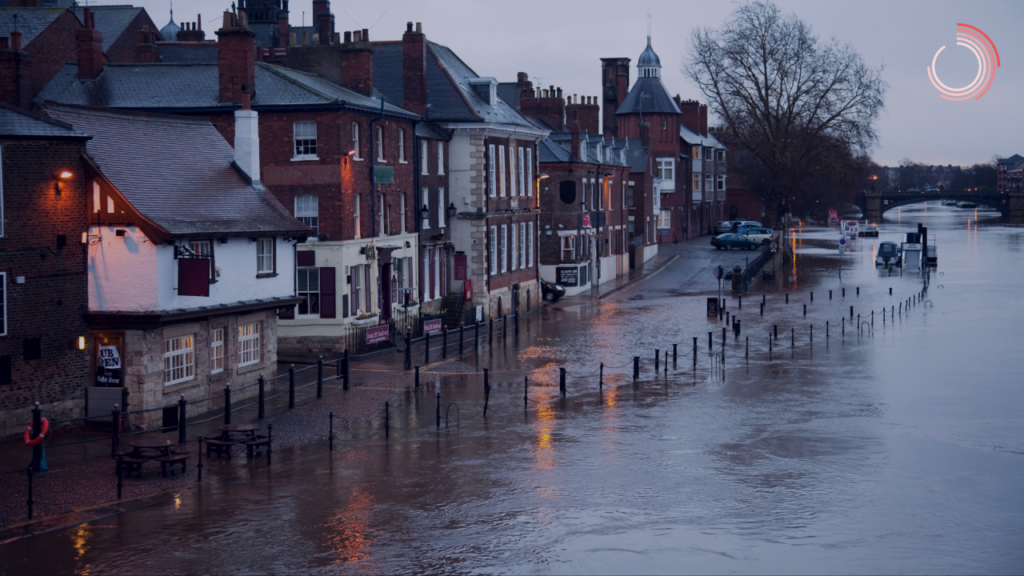
Climate change is fundamentally reshaping the insurance landscape, with extreme weather events becoming more frequent, severe, and unpredictable.
For insurers and customers alike, this means that climate change risk assessment is no longer a theoretical exercise—it’s a practical necessity. The UK Government has recognised this, with the Climate Change Committee (CCC) providing independent advice on how to assess and manage climate-related risks across the country.
For customers, when your renewal date approaches, you’ll receive a renewal pack outlining your policy details, renewal premium, and payment method. It’s essential to review your policy details and cover level each year, especially as the risks linked to extreme weather events—like flooding, drought, or storms—continue to evolve. If your circumstances or the risks in your region have changed, you may need to update your details and adjust your cover so the claims process is easier if something does go wrong.
Opportunities facing the market
The CCC recommends that the UK prepare for a 2°C global warming level, while also assessing risks up to 4°C. This guidance helps insurers, businesses, and policymakers make informed decisions about future climate risk and the actions needed to build resilience. Insurance companies are responding by developing new products and services tailored to the unique challenges of different regions—such as drought-resistant crop insurance for areas facing water shortages, or enhanced flood cover for communities at risk from sea level rise.
For insurers, the challenge is not just about managing risk, but also about seizing opportunities.
By investing in climate change research and developing innovative insurance solutions, companies can help customers adapt to new risks while supporting the transition to a low-carbon economy. The UK Government’s commitment to reducing greenhouse gases and achieving global emissions reductions is central to this effort, and insurance companies play a vital role in supporting both mitigation and adaptation.
Ultimately, the impact of climate change on insurance is both a challenge and an opportunity. As extreme weather events become more common, the need for robust climate change risk assessment, flexible insurance products, and clear communication with customers will only grow.
The decision you actually need to make – Can we defend our risk position?
That is the real decision behind this topic.
It is not just “have we looked at climate risk?” It is “can we explain our position in a way that stands up?”
For most businesses, that means being able to show:
- where the main exposure sits across the estate
- which sites matter most
- what the likely business implications are, including an estimate of potential impacts using relevant indicators and scenarios
- and whether anything is being done about the key risks
Formal climate risk assessment sets and indicators are used to support these estimates, drawing on scenarios to project possible outcomes. Risk assessments are based on responses of a climate system that is no longer staying within a stationary range of extremes. The assessment of climate risk is based on formal analysis of the consequences, likelihoods, and responses to climate change impacts.
That is a higher standard than many companies are currently set up for.
Not because they know nothing. Usually the opposite. They have a lot of information, but it does not come together cleanly.
Where things usually break down – The problem is fragmented information
Most organisations already have some relevant material.
They may have site surveys, broker submissions, continuity plans, flood information, engineering reports, older assessments, and internal risk commentary. The issue is rarely a total lack of information.
The issue is that it sits in different places, was produced for different reasons, and cannot easily be brought into one consistent view. In addition, accessing all the relevant resources and knowledge needed for a comprehensive understanding of climate risk can be challenging, as information may be scattered across various systems and formats.
That creates three common problems.
First, assets are hard to compare. One site may have a recent assessment, another may rely on older information, and another may only have broad location-level data.
Second, assumptions are unclear. People cannot always explain why one site is judged differently from another.
Third, priority is blurred. When everything looks vaguely risky, it becomes difficult to say what really matters. Uncertainty often arises from fragmented access to data and resources, making it harder to prioritise and compare risks effectively.
That is usually where the renewal process becomes harder than it should be.
The business is then trying to build a coherent story late in the process, often under time pressure.
What good looks like – A clear asset-level baseline
Good preparation is usually simpler than people expect.
It does not mean building the most complicated model. It means having a structured, consistent baseline across your assets.
In practical terms, that usually means:
- a consistent method across the estate
- assumptions that can be explained in plain English
- a clear sense of which assets matter most
- using climate risk indicators and scenarios to assess vulnerability and exposure at the asset level
That kind of baseline does two useful things.
First, it makes conversations with insurers and brokers easier because the business can explain its position more clearly.
Second, it helps the business itself. Once you can see where the main exposure sits, you can decide where action is worthwhile and where it is not.
Climate risk assessment depends on hazard, exposure, and vulnerability. Adaptation measures can help decrease climate risk by addressing these.
That is often more valuable than the renewal conversation itself.
A Case Study – A UK manufacturer with 12 sites

Take a UK manufacturer with 12 operational sites.
The business probably already knows, at a broad level, that some locations are more exposed than others. The risk profile of each site is dependent on factors such as location, infrastructure, and local climate projections. It may also know that a small number of sites are much more important operationally than the rest, especially those that are operationally critical or particularly vulnerable.
Assessment sets and indicators, such as temperature, precipitation, and sea level rise, can be used to evaluate vulnerability at the site level. Climate change vulnerability describes how strongly people or ecosystems are likely to be affected by climate change.
But unless that is brought together properly, renewal can still become awkward.
The insurer is trying to understand whether risk is concentrated, whether the company understands that concentration, and whether there is evidence of sensible risk management around the sites that matter most.
If the company can show that clearly, the conversation becomes more grounded.
For example, if it can explain that four sites drive most of the exposure, two are operationally critical, and specific actions are already in place or under review, that is a much stronger position than sending a bundle of disconnected reports.
The difference is not just presentation. It is clarity.
What this can change – Pricing, delays and negotiation quality
It would be too strong to claim that a better view of climate risk automatically gives a lower premium.
Insurance pricing depends on many things beyond a single client’s preparation, including market cycle, capacity, reinsurance conditions and wider loss experience. Marsh’s latest data is a useful reminder that rates can fall even when climate risk is rising in importance.
But better preparation can still make a real difference, not only by reducing risk but also by identifying opportunities facing businesses that proactively manage climate risk.
Effective management of climate risks involves identifying hazards, assessing vulnerabilities across supply chains, and using scenario planning to evaluate different climate scenarios. Integrating accumulated knowledge and climate data into strategic decisions, and investing in adaptation, helps build resilience and improves negotiation outcomes.
It can:
- reduce late-stage questions
- help the broker present the account more clearly
- make the business easier to understand
- improve the quality of the negotiation
- highlight practical actions that may reduce risk over time
In other words, the value is not “gaming the insurer”.
It is reducing the information gap and entering the process with a firmer grasp of your own position.
Clarity before renewal
This is where RedLines fits best.
Not as an insurance pricing tool. Not as an underwriting model.
The value is in helping a business build a clearer, more consistent view of climate-related risk across its assets before renewal discussions begin.
That gives you something more useful than a general statement that climate risk has been considered.
It gives you a basis for:
- clearer conversations with insurers and brokers
- better internal discussions about where risk really sits
- more practical decisions about what to do next
If renewal is approaching, the aim is simple: do not wait until the process is already under pressure before trying to pull the picture together.
RedLines provide simple, easy-to-use software that shows how weather and climate could affect your operations, suppliers and finances, including insurance. Whether that’s through our guidance or self-served.
Book a call with us, and we can run an example there and then.